Before anyone reaches for the keyboard, takes a deep breath and types something they may later regret, I have prepared two short community guides explaining the Berri Barmera Council’s Draft Annual Business Plan and Draft Long Term Financial Plan.
They are not Council documents.
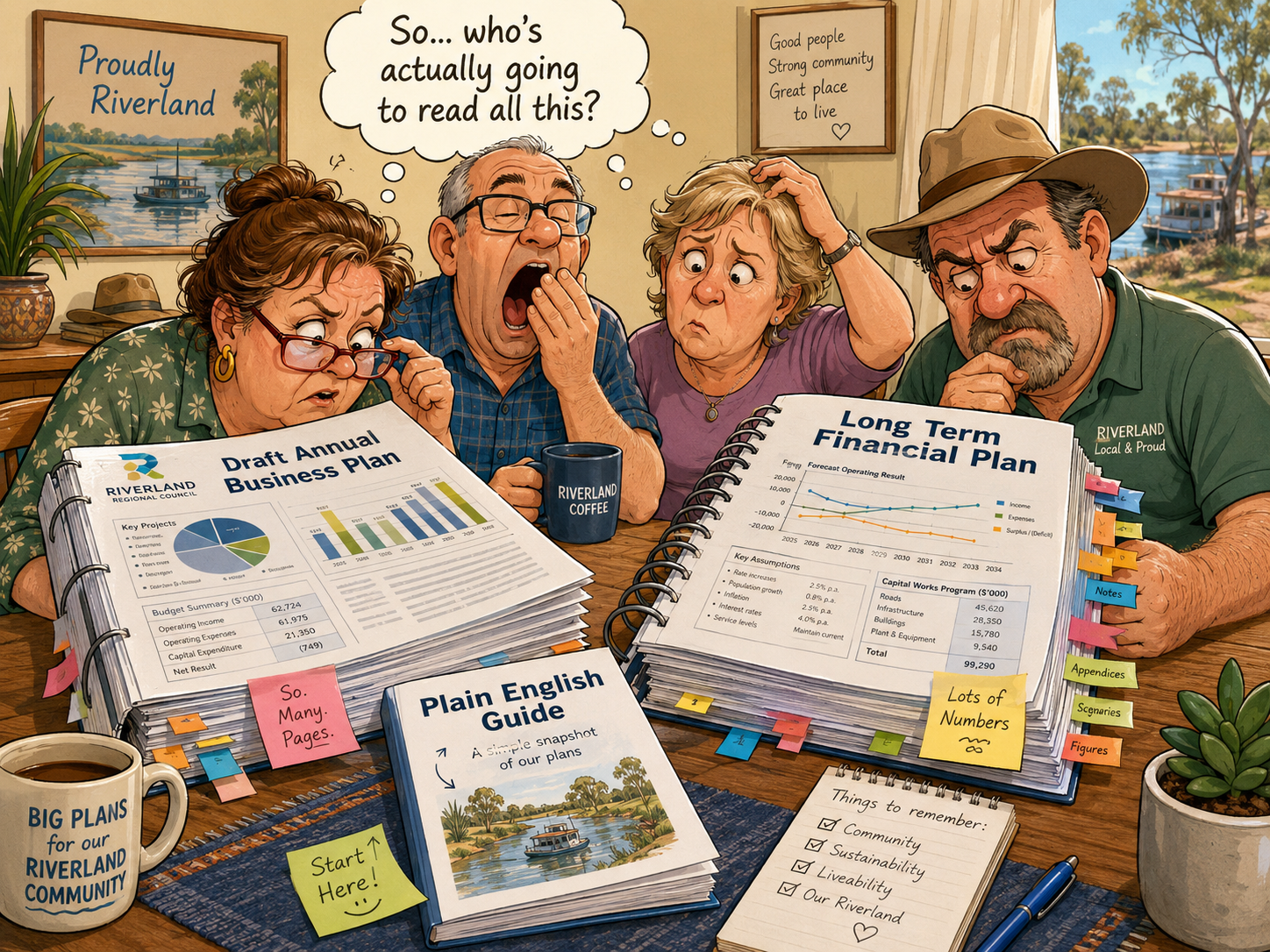
They are my personal interpretation of the information contained in the official plans, written in plain English for people who probably do not have the time, interest or enthusiasm required to work through pages of budgets, depreciation, asset renewal figures and financial forecasts.
That is not a criticism. Most people have lives to live, families to look after, businesses to run and bills of their own to pay.
The Annual Business Plan is essentially about what Council proposes to do during the next financial year, what services and projects it intends to provide, and how those things will be funded.
The Long Term Financial Plan asks the larger and more uncomfortable question:
Can we afford the future we are planning?
Neither document makes particularly light reading. They deal with rate increases, debt, roads, buildings, wastewater infrastructure, staff costs, depreciation and the growing cost of maintaining assets built by previous generations.
There is no secret pool of money hidden behind the Council chamber.
Every service costs something. Every asset eventually needs repairing or replacing. Delaying maintenance generally does not make it cheaper, and doing nothing is still a decision, often an expensive one.
That does not mean residents should simply accept everything placed before them. People have every right to question the figures, challenge priorities, suggest alternatives and tell Council when they believe it has got something wrong.
But there is a difference between criticism and abuse.
Council staff live in our community. Councillors live in our community. We shop in the same shops, drive over the same potholes, pay rates and charges, attend the same sporting clubs and hear the same concerns around the supermarket aisle.
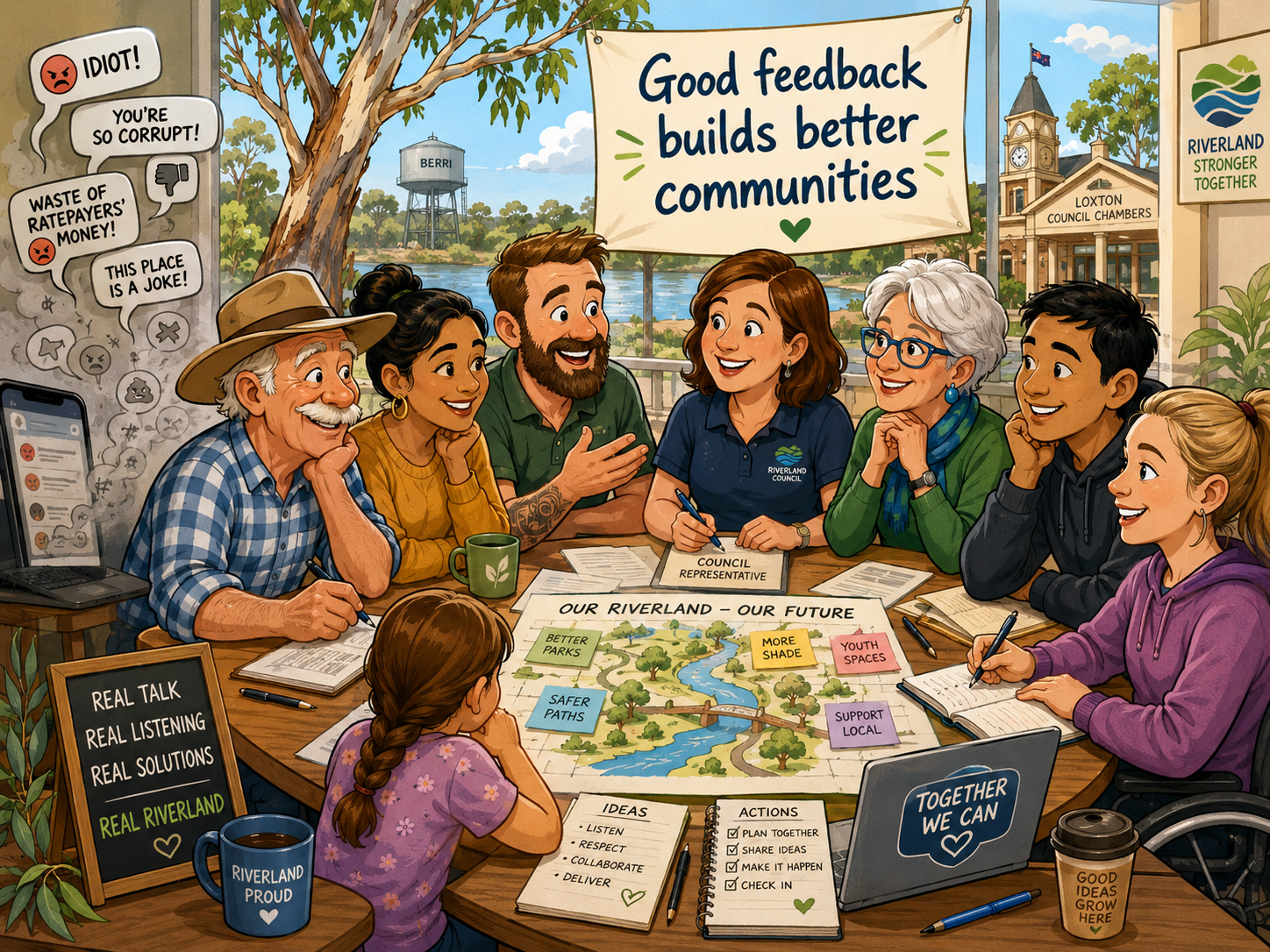
Nobody involved is perfect, and neither are the plans.
However, posting insults, accusations and recriminations without reading the information does not fix a road, renew a wastewater pipe or reduce Council debt. It merely creates more noise around decisions that are already difficult enough.
I prepared these guides because I am tired of seeing serious community discussions reduced to anger, personal attacks and claims that anyone who disagrees must be corrupt, incompetent, entitled or somehow opposed to the interests of the Riverland.
We can do better than that.
You may agree with my interpretation of the plans. You may disagree completely. That is democracy.
All I ask is that people look at the information, consider the choices and contribute respectfully.
The Riverland was built by generations of people who worked, volunteered, argued, compromised and occasionally admitted that somebody else may have had a reasonable point.
Perhaps we could try a little more of that.
What has happened with the renewal of Barmera lake Bonney jetty plan? I believe some sum of grant money was received by Council to partly support this project. If so, has it been partitioned from the money to be part of these discussions ? Bob Scudds
Great question Bob,
The ‘Renewal of the Barmera Lake Bonney Plan’ was never a plan with money allocated …. yes, there is grant money but that is just for the design phase which is under way as we speak. Then comes the hard part! Having the ‘shovel ready’ project for applications to get the jetty built (which estimates now are more like the $4-5 million and not the $5-7-8 Million) due to innovative design and new materials and methods on the market…. it, and a BIG IF, we get the grant money to build the jetty…. then the hard part starts….
And…. that is the bit that everybody doesn’t want to understand. That new $4 million jetty goes on our assets list and we have to start planning to repair it over the next 60-80. years and then replace it over the next 60-80 years – so we have to put a little money aside… that is the achilles heal of Council – DEPRECIATION!
The maths has been done and the replacement and depreciation works out pretty good in respect to maintaining the old jetty, replacing it and continuing to repair it at our cost! But, it is not a ‘dream’ lost or forgotten, it is one of many projects the current Administration and Elected Members have going that we WILL work towards so long as we can get back ‘in the black’ and not leave a legacy of debt and unmaintained assets like the state of affairs we inherited.
I am always happy to speak face to face or you are welcome to any and all of our Council meetings to ask the ‘hard questions’… as a matter of fact I encourage it.
Cheers,
Ian